Peter-Ayers Tarantino’s Manhattan apartment is packed with books and artwork in every direction. It’s chaotic, layered, and unbelievably charming.




Peter-Ayers Tarantino’s Manhattan apartment is packed with books and artwork in every direction. It’s chaotic, layered, and unbelievably charming.
Dani Offline writes about how everyone wants to be a DJ, but no one wants to dance. She argues that the commodifiction of art has devalued the experience of enjoying art for its own sake.
I present this example to mark a paradox that troubles the title of this essay. Pure, anonymous participation in something strange and beautiful is often that which draws us to the center of it all. The best writers I know are devoted readers. The best musicians I know listen to music, constantly. Is it such a problem that everyone wants to be an artist these days?

First snowfall of the season.
Bud Smith writing in The Paris Review about his truck desk,
I’d built a portable desk inside it. My truck desk, I called it. A couple of planks screwed together, our union sticker slapped on, the whole deal sealed with shellac. I’d built the desk so it slid into the bottom of the steering wheel and sat across the armrests. I used to hang back at the job and sneak in some creative work while the rest of the crew went to break. My desk—which I’d taken far too long to build and perfect through many prototypes—had been stowed behind the driver’s seat when the truck was hauled off by the wrecker.
There is something amazing about how Smith built a workspace from the world around him, writing squeezed between shifts.
Chase Anderson wrote a guide to reading Jane Austen books in order.
Geoffrey Litt on how he uses LLMs to code like a surgeon:
A surgeon isn’t a manager, they do the actual work! But their skills and time are highly leveraged with a support team that handles prep, secondary tasks, admin. The surgeon focuses on the important stuff they are uniquely good at.
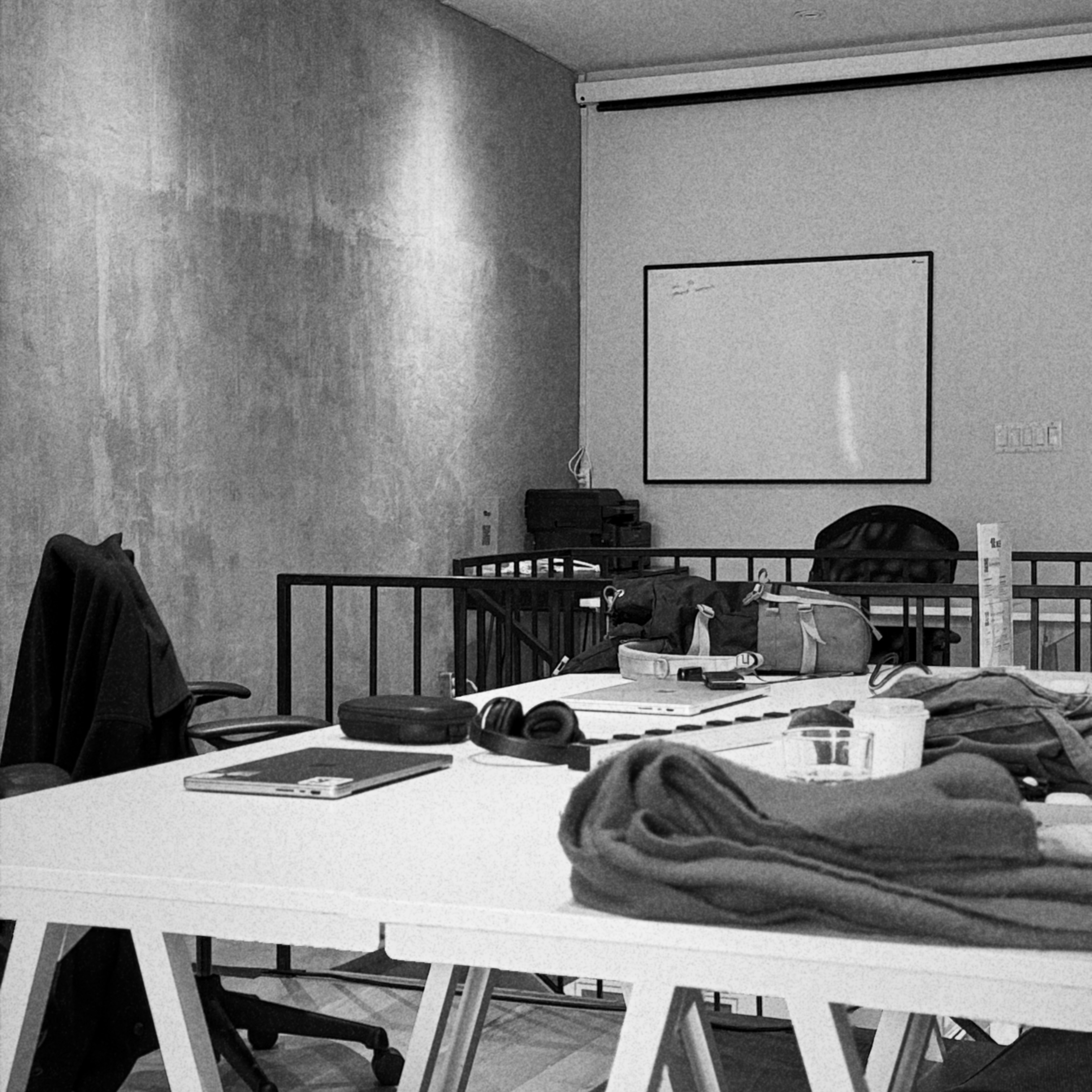
Was playing around with Leica’s Pro Manual Camera iOS App today.
Anil Dash on most people in the tech industry, who actually build things, share the same feelings on AI:
Technologies like LLMs have utility, but the absurd way they’ve been over-hyped, the fact they’re being forced on everyone, and the insistence on ignoring the many valid critiques about them make it very difficult to focus on legitimate uses where they might add value.

Awesome memorial by Victoria Day.
Alex Martsinovich on why it’s rude to show AI output to people:
For the longest time, writing was more expensive than reading. If you encountered a body of written text, you could be sure that at the very least, a human spent some time writing it down. The text used to have an innate proof-of-thought, a basic token of humanity.